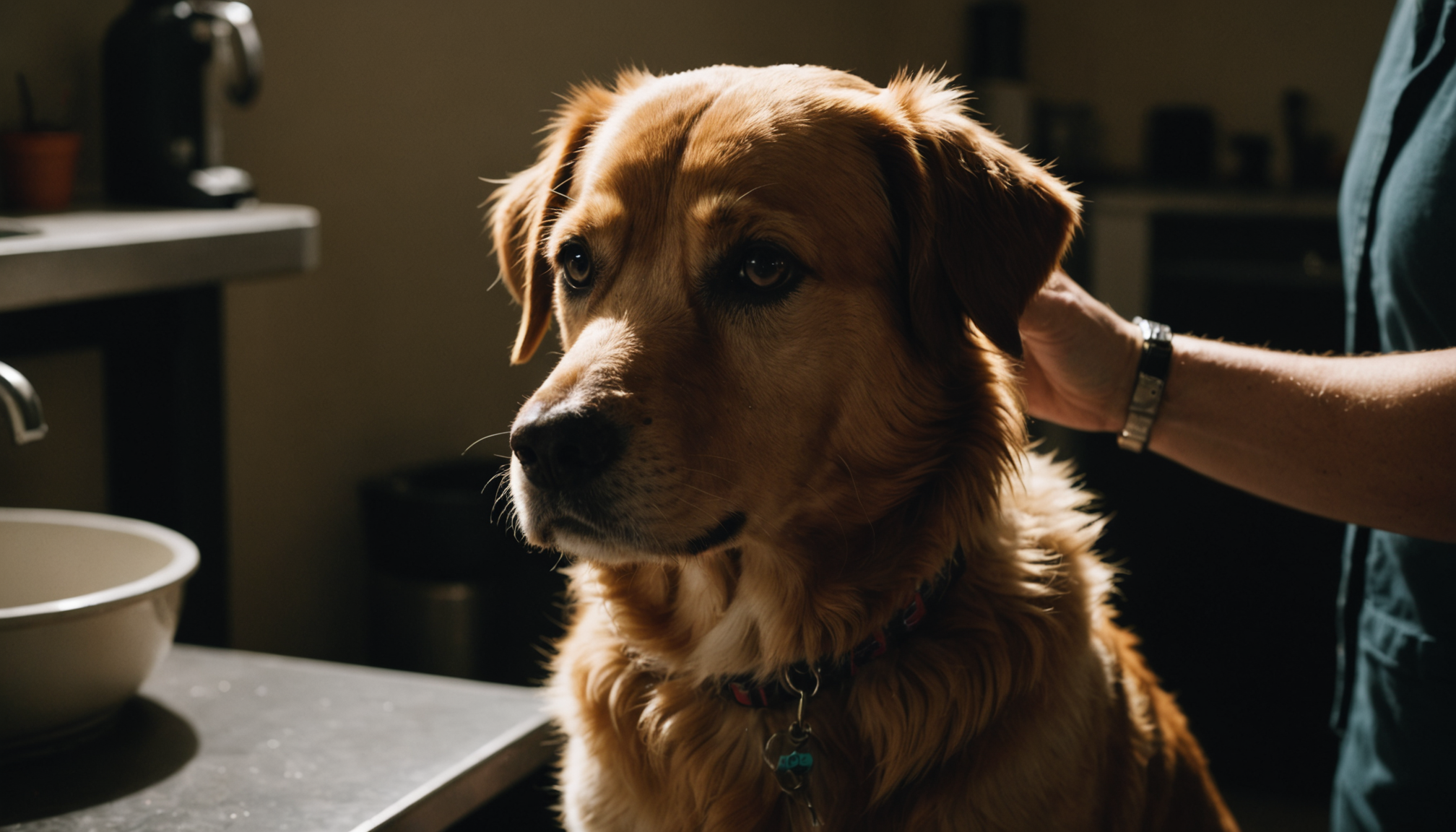
Dog Grooming for Anxious Dogs San Diego: Stop Guessing, Start Verifying
"Great with anxious dogs" is one of the most repeated — and least proven — phrases in San Diego pet grooming. If your dog has come home from a salon trembling, shut down, or suddenly afraid of the car, you already know that phrase means nothing on its own.
TL;DR:
- Most groomers who claim to handle anxious dogs rely on speed, not technique — speed actually makes anxiety worse.
- There are specific, observable practices that separate real anxiety-aware grooming from marketing language.
- You can evaluate any San Diego groomer's claims before you book by asking four direct questions.
---
Why "Good With Anxious Dogs" Means Nothing Without Proof
Walk through any grooming salon's website in San Diego and you'll find some version of this claim within the first two sentences. It costs nothing to write. It requires zero certification, zero training hours, and zero accountability.
Here's the problem: dog anxiety during grooming isn't just unpleasant — it compounds. A 2023 study published in Applied Animal Behaviour Science found that dogs who experience repeated high-stress grooming interactions show measurably elevated cortisol levels not just during sessions, but in the 24–48 hours following them. That's not a bad day. That's trauma accumulating across appointments.
What you need isn't reassurance — it's evidence. A groomer who genuinely works with anxious dogs should be able to describe how they do it in specific, observable terms. If the answer is "we just go slow and use a gentle voice," that's not a methodology. That's a vibe.
When you're comparing San Diego groomers on the questions that actually matter, anxiety-handling protocols should sit at the top of your checklist — not buried under price and proximity.
What proof looks like:
- Named certification programs (Fear Free, Low Stress Handling)
- Specific descriptions of how they modify the environment (lighting, noise, number of dogs present)
- A stated willingness to stop a session if a dog reaches threshold
- Transparency about what happens when a dog can't complete a full groom in one visit
If a groomer can't answer those four points clearly, "great with anxious dogs" is a marketing phrase, not a practice.
---
Speed Grooming vs. Slow Grooming for Anxious Dogs
Here's the most important thing most San Diego dog owners don't know: the biggest driver of grooming-related stress isn't loud dryers, clippers, or unfamiliar smells. It's time pressure.
High-volume grooming salons typically schedule a dog every 45–60 minutes. A full groom — bath, dry, brush-out, haircut, nail trimming and grinding — done properly on an anxious dog can take 2–3 hours. Do the math: a salon running on a 60-minute slot is structurally incapable of doing slow grooming, regardless of how their website reads.
Speed grooming works by pushing a dog through discomfort before it can escalate. The dog gets done. They may not bite. But they've been flooded — exposed to stimuli at a pace that overwhelms their nervous system's ability to cope. Flooding is the opposite of desensitization, and repeated flooding is how a mildly nervous dog becomes a genuinely reactive one.
What slow grooming actually involves:
- Breaks between stations (bath, dry, table work) that let the dog decompress
- Allowing the dog to stand, shift, or pause without being physically restrained back into position
- Introducing tools (nail grinder, clippers) without immediately using them — letting the dog sniff and adjust
- Splitting a full groom across two shorter visits if a dog is in early stages of building tolerance
A dog who receives a bath and brush-out treatment in a calm, unhurried way on visit one — and builds to a full grooming package over two or three sessions — is far less likely to become a dog who needs sedation at the vet by age five.
---
What Real Dog Grooming for Anxious Dogs Looks Like in Practice
Talking about anxiety-aware grooming is easy. Watching it happen tells you everything. If you can observe a session — or even a pre-appointment meet-and-greet — here's what to look for in 2026.
The Intake Process
A groomer who takes anxiety seriously asks more questions before the first appointment than most salons ask across an entire grooming history. Expect questions like:
- Where has your dog been triggered before (table, dryer, nail trimming, ear cleaning)?
- Does your dog have a history of mouthing, freezing, or vocalizing during grooms?
- What does your dog's stress look like at home — and how long does recovery take?
If intake is a 30-second form asking for your dog's name and breed, that's a signal.
The Environment
Anxious dogs are hypersensitive to stimulation. A fear-aware salon reduces what it can control:
- Separate grooming spaces or staggered scheduling so your dog isn't in a room with 8 other dogs
- Dryer noise managed with lower heat settings and longer drying time rather than high-blast speed drying
- Non-slip mats on every surface (a dog who can't find footing is an immediately stressed dog)
The Table Work
Watch how a groomer handles a dog who freezes or whale-eyes during nail trimming. A groomer trained in anxiety-aware technique will stop, pause, let the dog reset, and try again with a lower-intensity approach. A groomer running on volume will hold the leg firmer and finish faster.
That difference — pause vs. push — is the entire ballgame for anxious dogs.
---
Questions to Ask San Diego Groomers Before Booking a Nervous Dog
Before you book dog grooming for an anxious dog anywhere in San Diego, ask these four questions directly. The answers will tell you more than any review.
1. What training do your groomers have specifically for anxious or reactive dogs?
Look for: Fear Free certification, Low Stress Handling coursework, or named continuing education programs. "Experience" without a framework is not a training answer.
2. How do you handle a dog who reaches their threshold mid-groom?
Look for: a clear willingness to stop the session, a protocol for what happens next (partial groom, reschedule, owner notification). A red flag answer: "It hasn't happened" or "we always get it done."
3. What does your scheduling look like — how long is a typical anxious dog's appointment?
Look for: flexible time blocks, not fixed 60-minute slots. For a medium-to-large breed with known anxiety, anything under 90 minutes for a full grooming package should raise a question.
4. Can my dog have a meet-and-greet before the first groom?
Look for: yes, and ideally a low-stakes first visit (just a bath and brush-out, no full haircut) to let your dog build a positive association with the space before the intensity of a full groom.
If you want a deeper framework for evaluating any groomer's answers — not just on anxiety but on the full picture — this comparison guide for San Diego grooming salons walks through the five questions worth asking across the board.
---
Signs Your Anxious Dog Actually Had a Good Grooming Experience
Most owners focus on what happens at the salon. The more reliable data is what happens in the 24 hours after.
A dog who had a genuinely low-stress grooming experience typically shows:
- Normal eating and drinking within an hour of getting home
- Willingness to engage — plays, approaches family members, doesn't hide
- Relaxed body language — soft eyes, loose posture, no excessive licking or yawning
- No regression in behavior — doesn't suddenly guard the car door, refuse leash walks, or startle at sounds they normally ignore
A dog who was pushed through stress, even without anything visibly "bad" happening, often shows the opposite: won't eat, hides under furniture, or wakes up anxious the next morning. That's the cortisol spike in action.
Over time, a dog who regularly has calm, positive grooming visits will start showing neutral or even mildly positive pre-groom behavior — sniffing the salon door, walking in without bracing, accepting the nail grinder without a flinch. That progression is possible. But it requires a groomer who's actually building toward it, not one who's just finishing the appointment.
Understanding what fear-free certification actually requires from a groomer — and what it doesn't — helps you ask better follow-up questions once a salon brings it up.
And if your dog is newer to grooming and you're wondering how to structure their care going forward, building the right grooming package from the start can help you match service level to where your dog actually is — not where a standard upsell package assumes they are.
---
If your dog has had a rough grooming experience and you're ready to try something genuinely different, book an appointment with Happy Tails Pet Spa at /contact. Request a meet-and-greet for your first visit — it's the single best first step for a nervous dog, and our groomers will walk you through exactly how we'll approach your dog's specific stressors before any tools come out.
<<>>