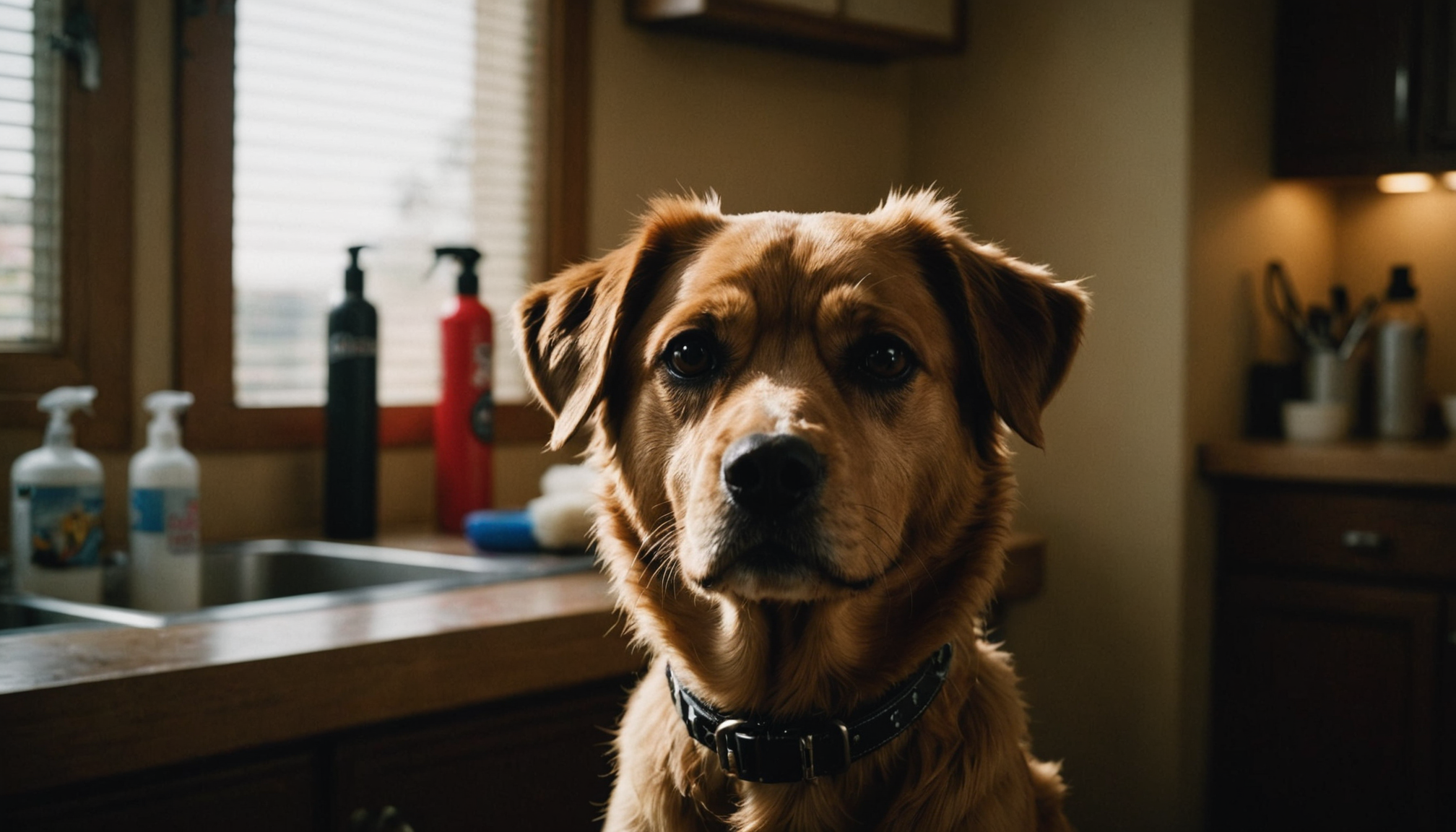
Fear-Free Dog Grooming San Diego: What Certification Really Means
"Gentle handling" is printed on roughly half the grooming salon signs in San Diego — but fewer than one in ten groomers in the U.S. hold an actual Fear Free certification as of 2026. That gap is why your dog can look perfectly still on the table and still come home flooded with cortisol, hiding behind the couch for the rest of the afternoon.
TL;DR:
- "Gentle" is a marketing word; Fear Free is a formal credential that requires coursework, testing, and ongoing continuing education.
- A dog that sits quietly through grooming isn't necessarily calm — shutdown behavior and genuine relaxation look nearly identical to the untrained eye.
- Before you book any San Diego groomer who uses fear-free language, there are five specific questions that will tell you in 60 seconds whether the claim is real.
---
What Fear-Free Dog Grooming Actually Certifies
Fear Free is a formal professional program — not a philosophy, not a vibe. Launched by veterinarian Dr. Marty Becker, it requires practitioners to complete structured online coursework covering animal behavior, stress physiology, and low-stress handling techniques. After passing a proctored exam, certified professionals earn the credential and must renew it every two years with continuing education hours.
As of 2026, Fear Free offers a dedicated Pet Grooming Professional certification pathway, separate from the veterinary track. Completing it takes approximately 8–12 hours of coursework. That's not a weekend workshop someone's salon manager attended once — it's an individually earned, individually verified credential tied to a specific person's name, not the salon's brand.
What does the coursework actually cover? A Fear Free certified groomer learns:
- How to read the Emotional Color Wheel, a tool for assessing anxiety and arousal levels before and during an appointment
- Which handling positions reduce physical and psychological restraint
- How to use counter-conditioning during nail trims, blow-drying, and ear cleaning
- When to pause or end a session rather than push through a dog's threshold
- How scent, sound, and lighting inside a grooming space raise or lower baseline stress
When you're searching for fear-free dog grooming in San Diego, the credential to ask for by name is the Fear Free Pet Grooming Professional certificate — and the groomer should be able to show you the name it's registered under on the Fear Free website.
---
Why 'Gentle Handling' Without Protocol Still Triggers Stress
A groomer can be kind, patient, and genuinely love dogs and still inadvertently flood your dog's nervous system — because stress in animals isn't primarily caused by rough handling. It's caused by loss of control and unpredictability.
Think about what a standard grooming appointment looks like from your dog's perspective. A stranger lifts them onto an elevated table. A noisy dryer runs inches from their face. Their paws are held firmly for nail trimming. Their face is touched repeatedly near the eyes and ears. All of this happens in an unfamiliar-smelling room, often alongside the sounds and smells of other dogs.
Without formal fear-free protocol, even a gentle groomer's default response to a nervous dog is to hold them more firmly, move more quickly to get through it, and offer reassurance in human terms ("it's okay, buddy") — none of which actually reduces a dog's physiological stress response. In fact, research cited in Fear Free training materials shows that restraint-based handling can spike cortisol levels within 3 minutes of application.
The difference in a genuinely fear-free grooming appointment isn't just gentleness. It's:
- Pre-appointment scent application — species-appropriate calming pheromones in the space before your dog arrives
- Letting the dog set the pace for first contact rather than immediately securing them to the table
- Offering high-value treats throughout (not just at the end) to build positive associations in real time
- Reading body language signals at a level that notices micro-stress indicators — lip licking, yawning, tension in the tail base — before they escalate
This is also why spotting grooming red flags before you hand over the leash matters so much. A salon that rushes intake, skips behavioral observation, or crowds dogs in close proximity is already creating a stress environment before the first brush stroke.
---
Signs Your Dog Is Shut Down, Not Calm
This is the section most San Diego dog owners wish someone had shown them earlier.
Shutdown — also called learned helplessness in behavioral science — is when a dog stops reacting not because they feel safe, but because their nervous system has learned that reacting doesn't change anything. It can look almost identical to calm cooperation. Both involve a dog standing still, not pulling away, not vocalizing.
Here's how to tell the difference:
| Shutdown | Genuine Relaxation |
|---|---|
| Still, but with rigid posture | Still, with soft muscles and a loose jaw |
| Eyes wide, pupils dilated | Soft, blinking eyes with normal pupil size |
| Ears pinned flat or hyper-alert | Ears in neutral position |
| Comes home exhausted, hiding, or clingy | Comes home neutral or relaxed within an hour |
| Slow to eat or drink after pickup | Normal appetite and energy post-appointment |
If your dog regularly returns from grooming and sleeps for four or more hours, hides in a crate they normally ignore, or seems "off" into the evening, that pattern is your signal. The appointment wasn't traumatic in a visible way — but the cumulative stress load was real.
This also connects to why nail trimming and grinding done with proper fear-free technique is so different from a standard trim. The nail tool isn't the variable — the handling approach around it is.
---
How Fear-Free Grooming in San Diego Looks Different Appointment to Appointment
One of the most important things a Fear Free certified groomer does that most groomers don't? Track emotional progress between appointments.
In a traditional grooming model, every appointment is essentially the same experience repeated. The dog walks in, gets groomed, walks out. There's no documented record of where the dog's stress threshold was, which handling techniques helped, or what the dog's emotional baseline looked like at intake.
In a fear-free model, that data is collected and used. A good groomer following proper fear-free protocol for fear-free dog grooming in San Diego should be building what's sometimes called an individualized low-stress handling plan — informal notes at minimum — that adjusts based on:
- Whether the dog was more or less anxious than last visit
- Which specific steps triggered the highest stress response
- What treat type or handling modification helped most
- Whether the dog's threshold is improving, holding steady, or declining over time
This is why a Fear Free appointment often takes 10–20 minutes longer than a comparable appointment at a standard salon. That's not inefficiency — it's the protocol working as designed.
If you've been thinking about switching to a different groomer in San Diego but worry about disrupting your dog's routine, a fear-free salon is actually one of the best transitions to make. The structured approach means your dog builds positive associations quickly rather than just tolerating a new environment.
---
Questions to Ask Before Booking a Fear-Free Groomer in San Diego
Here's your 60-second vetting script. Ask these five questions before you book, and listen carefully to whether the answers are specific or vague.
1. "Which groomer holds the Fear Free Pet Grooming Professional certification — and can I see the credential?"
The right answer names a specific person and offers to verify. The wrong answer is "we're all trained in fear-free techniques."
2. "How do you assess a dog's stress level at intake?"
Look for references to a behavioral observation checklist, a stress scale, or the Emotional Color Wheel. "We watch how they act" is not a protocol.
3. "What do you do if my dog hits their stress threshold mid-appointment?"
A certified groomer will describe pausing the session, offering counter-conditioning, and — if necessary — stopping and rescheduling. A non-certified groomer often says some version of "we push through because they usually settle down."
4. "Do you use pheromone diffusers or other environmental calming tools in the salon?"
This is a practical, low-cost tool that every fear-free practitioner knows about. If they've never heard of it, that tells you something.
5. "Do you keep notes on each dog's emotional history between visits?"
Yes means they're tracking progress. No means every appointment is starting from scratch — which means no cumulative improvement in your dog's stress response.
If you're not sure where your dog currently stands on the stress spectrum, it also helps to understand the grooming anxiety signs you might be reading incorrectly — because the subtle ones are easy to miss until you know what you're looking for.
---
At Happy Tails Pet Spa, our groomers hold Fear Free certification — individually, by name, verifiable — and we follow the full intake-to-finish protocol on every full grooming package, bath and brush-out, nail trimming and grinding session, and de-shedding treatment we offer. If your dog comes home hiding after grooming appointments, that's worth changing. Book your dog's first fear-free appointment at Happy Tails Pet Spa today — and bring your five questions. We'll answer every one.